Canang Sari in Bali: Understanding Daily Offerings and Their Meaning
If you visit Bali, you will often notice small, colorful arrangements of flowers placed outside homes, shops, temples, and other buildings. These beautiful offerings are called Canang Sari, an important part of daily Hindu religious practices in Bali.
Although they may look like simple flower decorations, Canang Sari carry deep cultural and spiritual meaning. They represent gratitude, devotion, and respect, and are an everyday expression of Balinese Hindu life.
What Is Canang Sari?
Canang Sari is a small daily offering traditionally prepared by Balinese Hindus. The word canang refers to the offering arrangement, while sari can be understood as its essence or core.
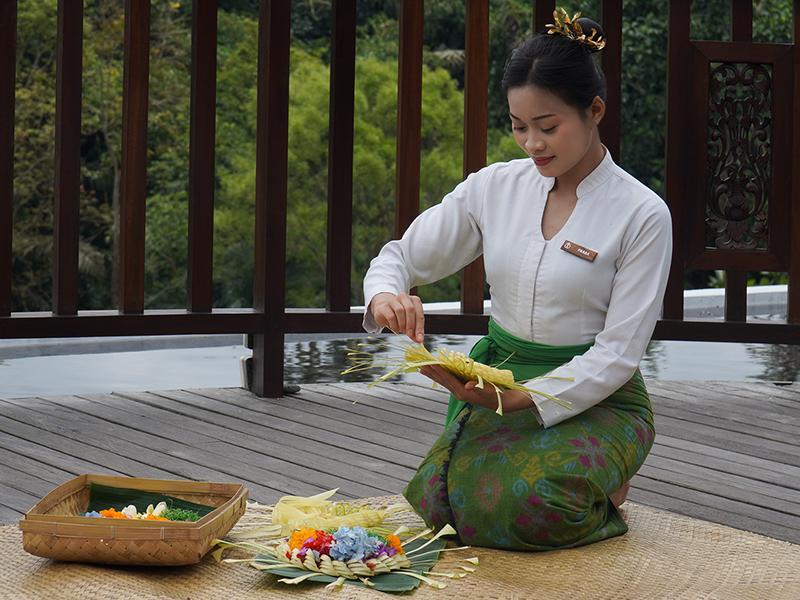
The offering is commonly made using a small woven palm-leaf tray filled with flowers and other symbolic elements. It is often accompanied by a small amount of incense.
Canang Sari can be found in family temples, household entrances, business premises, and other places considered spiritually significant.
The Meaning Behind Canang Sari
Canang Sari is more than a decorative arrangement. It expresses gratitude to God and reflects the Balinese Hindu philosophy of maintaining harmony between people, nature, and the spiritual world.
The flowers and other elements are arranged with care, and each part may carry symbolic meaning.
The offering is also a reminder of the importance of maintaining balance, showing respect, and appreciating the blessings of everyday life.
What Is Used to Make Canang Sari?
Traditional Canang Sari usually consists of several simple natural materials.
Common elements include:
Woven palm leaves: Form the small tray that holds the offering
Fresh flowers: Add color and carry symbolic meaning
Pandan leaves: Sometimes used as decoration
Rice: Often included as part of the offering
Incense: Burned during the offering ritual
The flowers are often arranged in different colors. Their placement and symbolism can vary depending on local traditions and family practices.
When and Where Can You See Canang Sari?
Canang Sari is commonly prepared and offered in the morning, although offerings may also be placed at other times depending on the occasion and local customs.
During your visit to Bali, you may notice them in many everyday locations, including:
Outside traditional Balinese homes
At family temples and larger temple entrances
In front of shops, restaurants, and hotels
On sidewalks and near building entrances
At certain public spaces and places of business
Seeing these offerings is one of the ways visitors can observe how religious traditions remain closely connected to everyday life in Bali.
Why Are Canang Sari Important in Balinese Daily Life?
Preparing and presenting Canang Sari is a meaningful daily activity for many Balinese Hindu families.
The practice reflects devotion and gratitude while helping maintain a connection between religious beliefs and daily routines.
For many people in Bali, making offerings is not simply a ceremonial activity reserved for special occasions. It is part of an ongoing tradition passed down through generations.
The time and attention given to preparing each offering also reflect the care and respect associated with the practice.
How Visitors Should Respect Canang Sari
Visitors are welcome to observe this beautiful tradition, but it is important to remember that Canang Sari are religious offerings rather than decorations.
Here are a few simple ways to show respect:
Avoid stepping on offerings: Be careful when walking near offerings placed on sidewalks or entrances.
Do not move or touch them: Leave the offerings undisturbed.
Ask before taking photographs: Be considerate, especially when people are performing prayers or preparing offerings.
Keep a respectful distance: Avoid interrupting religious activities.
Follow local guidance: If you are visiting a temple or participating in a cultural activity, follow the instructions provided by your host or local guide.
A little awareness and respect can help make your visit more meaningful.
Experience the Cultural Side of Bali
Bali's culture can be discovered not only through its temples, ceremonies, and traditional performances but also through small everyday practices such as preparing Canang Sari.
These daily offerings provide a glimpse into the values, beliefs, and traditions that continue to shape Balinese life.
As you explore the island, take a moment to appreciate these simple arrangements and the meaning behind them. Understanding Canang Sari can help you see Bali beyond its landscapes and tourist attractions, offering a deeper appreciation of its living culture.